Sort by:
67 products
67 products
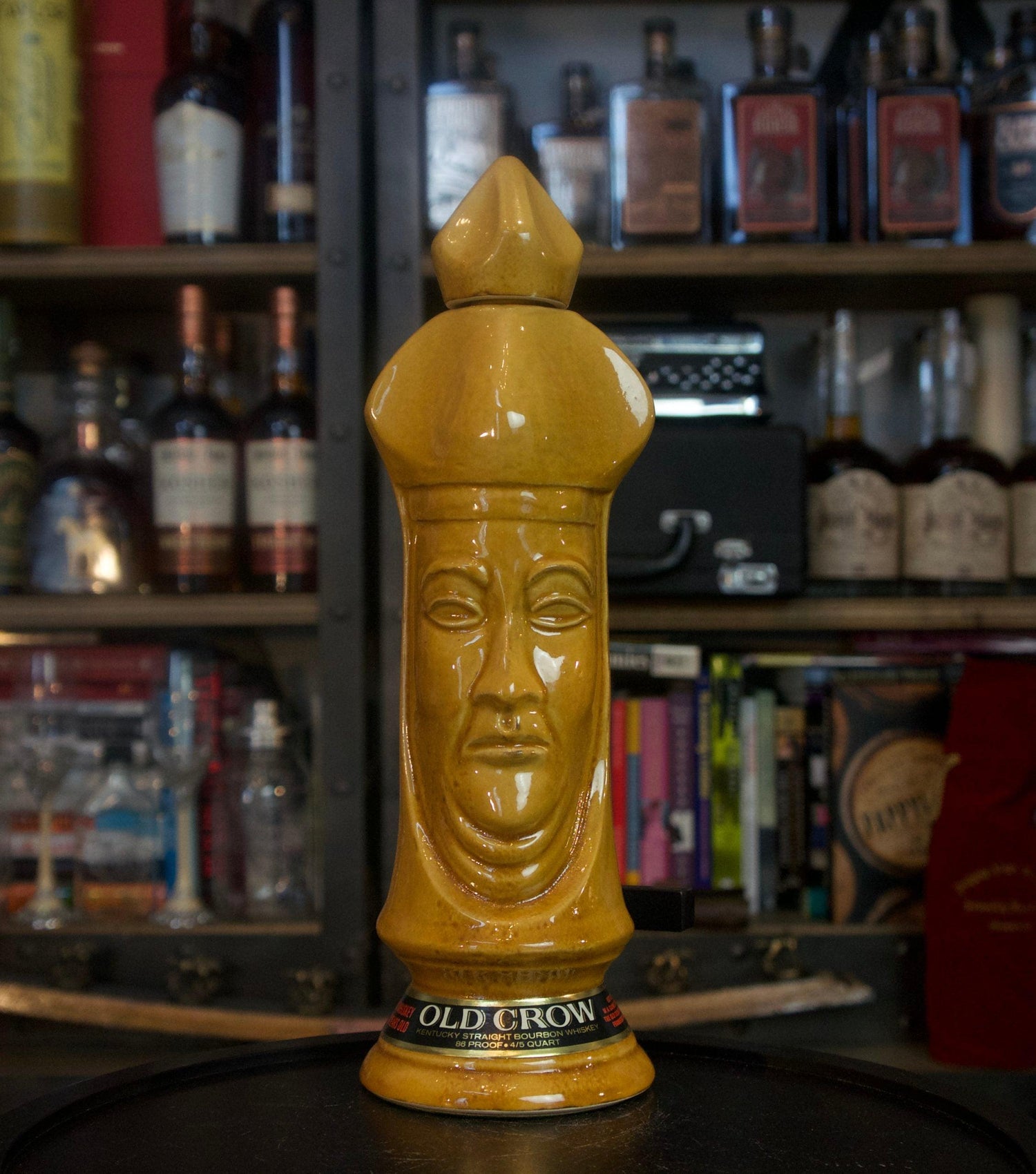
Back in the 1960s through the 80s, distilleries were having trouble selling their whiskey in bottles so they started creating unique bottlings through the use of Decanters. Old Crow, which was owned and produced by National Distillers created a full chess set of decanter bottles, complete with all pieces and the ability to send them postage to receive a carpeted chessboard as well. The whiskey inside is 86pf and age stated 10 years, but is among some of the highest rated whiskey by vintage enthusiasts that has ever been produced.
Note: Old decanters could possibly have some minor leakage during transit. We will do everything to prevent leakage but some is frequently expected and we cannot be held liable for minor leakage. Major issues - please contact us (such as decanter breakage, significant leakage) and please have pictures/video available.
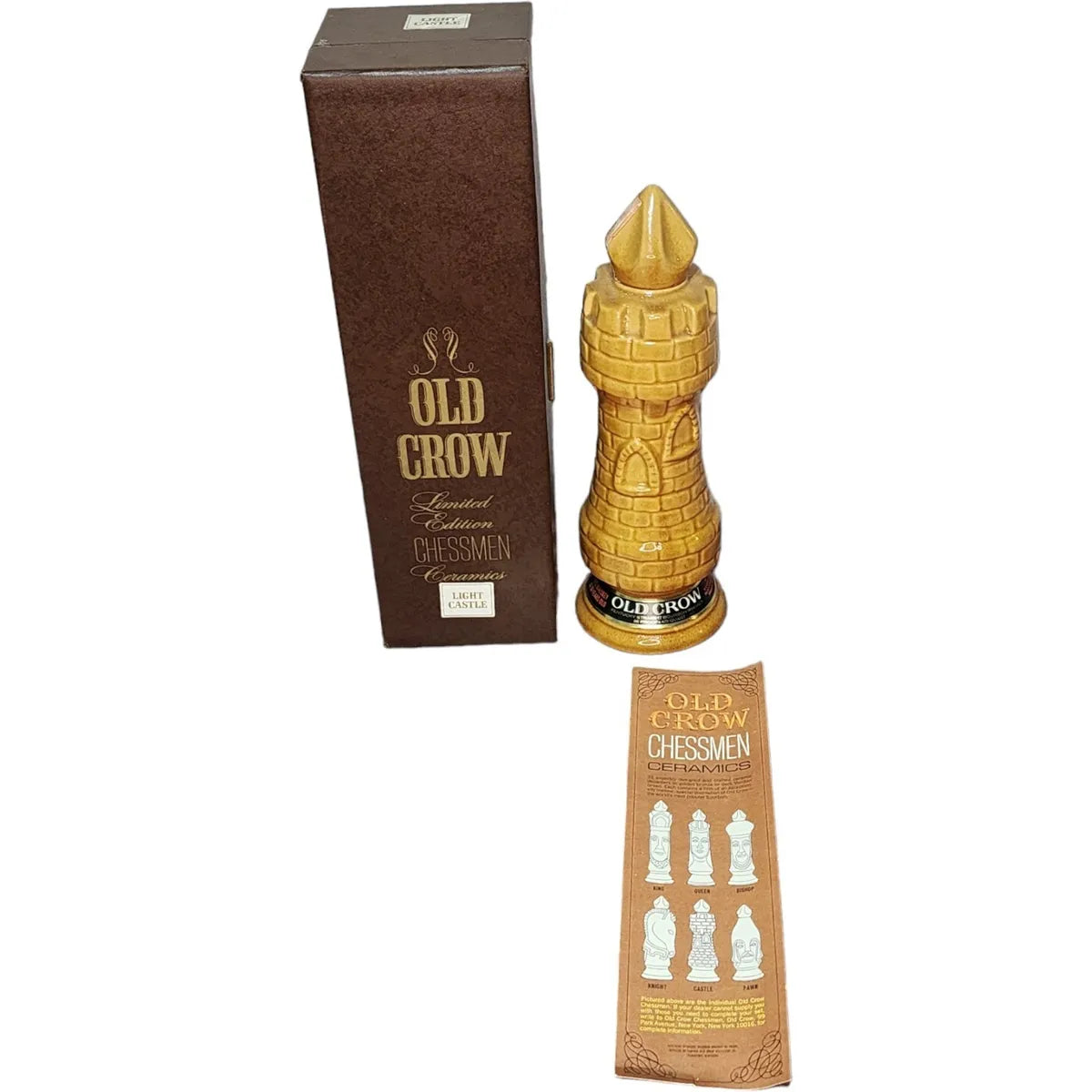
Back in the 1960s through the 80s, distilleries were having trouble selling their whiskey in bottles so they started creating unique bottlings through the use of Decanters. Old Crow, which was owned and produced by National Distillers created a full chess set of decanter bottles, complete with all pieces and the ability to send them postage to receive a carpeted chessboard as well. The whiskey inside is 86pf and age stated 10 years, but is among some of the highest rated whiskey by vintage enthusiasts that has ever been produced.
Note: Old decanters could possibly have some minor leakage during transit. We will do everything to prevent leakage but some is frequently expected and we cannot be held liable for minor leakage. Major issues - please contact us (such as decanter breakage, significant leakage) and please have pictures/video available.
Very Very Old Fitzgerald 12 year - Distilled in 1952 and bottled in 1964 (100pf) 4/5 Quart
$7,999.00
Unit price perVery Very Old Fitzgerald 12 year - Distilled in 1952 and bottled in 1964 (100pf) 4/5 Quart
$7,999.00
Unit price perThis 12 year old bottled in bond (100pf) expression was distilled at the legendary Stitzel-Weller distillery and and Julian “Pappy” Van Winkle himself. This 4/5 quart size bottle is in impeccable condition and comes complete with a gift box and 2 shot glasses bearing the Old Fitzgerald brand name as well. The Old Fitzgerald brand was considered a premium bourbon during the age that this was produced and the whiskey inside is considered some of the best and most highly sought after by collectors and enthusiasts alike.
Pappy Van Winkle 23 Years Old Decanter, Old Rip Van Winkle 23 Year
$35,999.00
Unit price perPappy Van Winkle 23 Years Old Decanter, Old Rip Van Winkle 23 Year
$35,999.00
Unit price perLast Drop Distillers seeks to find and bring to life the rarest of the rare whiskeys, offering them in extremely limited quantities. Leather, aged oak, earthy, raisin, dark fruit, dark cherry and tobacco on the nose. The taste is the definition of flamboyant with an orchestra of flavors with each flavor harmoniously mingled. Delightful notes of figs, dates, maraschino cherries, wood, saddle leather, pipe tobacco, toffee, plums, raisins, walnuts, and butterscotch. It’s a virtual symphony on your palate.
Back in the 1960s through the 80s, distilleries were having trouble selling their whiskey in bottles so they started creating unique bottlings through the use of Decanters. Old Crow, which was owned and produced by National Distillers created a full chess set of decanter bottles, complete with all pieces and the ability to send them postage to receive a carpeted chessboard as well. The whiskey inside is 86pf and age stated 10 years, but is among some of the highest rated whiskey by vintage enthusiasts that has ever been produced.
Note: Old decanters could possibly have some minor leakage during transit. We will do everything to prevent leakage but some is frequently expected and we cannot be held liable for minor leakage. Major issues - please contact us (such as decanter breakage, significant leakage) and please have pictures/video available.
National Distillers is one of the most sought after "vintage" producers. Known for it's beautiful flavors of baking spices, fresh cookies and cake. The Bond and Lillard brand has existed since the late 1860s and was added to the portfolio of National Distillers from just after prohibition until the distillery closed, however the brand has recently been revived and is reportedly produced at Wild Turkey. This expression was bottled in the 1960s, carries a 6 year age statement and 90 proof, bottled in an enormous half gallon size container back in the days when you could still buy whiskey by the Gallons at stores.
A fantastic old Prohibition era bottling of Kentucky straight bourbon whisky. Although the Volstead Act of 1919 had banned the production and sale of alcohol throughout the US, a certain number of distilling companies were permitted to continue bottling existing stock, mostly for medicinal use, but also for weekly baking rations. One such company was A. Ph. Stitzel Inc, who procured this particular barrel from the Davies County Distillery (registered distillery 2 in the 2nd district of KY). This distillery was one of the majority that were forced to close after prohibition was enacted. Records show that most of their stock was purchased by the American Medicinal Spirits Company, but some reached smaller companies like A. Ph. Stitzel as well, who bottled this using their Old Mock brand. A. Ph. Stitzel survived Prohibition, and was one of the few to emerge with a functioning distillery, refinancing themselves after the difficult 13 dry years by contract distilling for other companies as well, including the juggernaut Schenley corporation. They would of course would go on to merge with Julian 'Pappy' Van Winkle's W.L. Weller company to create the legendary Stitzel-Weller. The "18 Summers Old " phrase on this label was a persistent motif on Stitzel-Weller bottlings too, and can also be seen on some modern Van Winkle bottlings. Bottled in bond - distilled in 1916 and bottled in 1933, shortly before repeal, this includes the standard "medicinal purposes" only label.
A whiskey glut was happening in America as sales began to decline at the end of the 60s and continued through the 80s and 90s. Distilleries did not slow down production, assuming the glut was only temporary, but as they realized it wasn't, they had to come up with creative ways to move product. Many distilleries partnered with Non Distiller Producers, to bottle their whiskey under a different brand and export it overseas. This is a 20 year rye distilled in the 80s, most likely by Michter's at their location in Pennsylvania at that time, bottled under a different brand and exported to the Japanese market. It's a wonderful expression of aged pennsylvania rye, the same distillate as the Rye Royal 20year, but in a totally different and more rare bottling brand.
Produced by Brown Forman in the 1960s, this expression was selected by the President of Brown-Forman especially for "distinguished gentlemen". This was distilled at DSP-KY-414 which is one of the most highly sought after vintage distilleries, responsible for producing Old Forester brand from the end of world war II until 1980.
A whiskey glut was happening in Americaas sales began to decline at the end of the 60s and continued through the 80s and 90s. Distilleries did not slow down production, assuming the glut was only temporary, but as they realized it wasn't, they had to come up with creative ways to move product. Many distilleries partnered with Non Distiller Producers, to bottle their whiskey under a different brand and export it overseas. This is a 20 year rye distilled in the 80s, most likely by Michter's at their location in Pennsylvania at that time, bottled under a different brand and exported to the Japanese market. It's a wonderful expression of aged pennsylvania rye from this era.
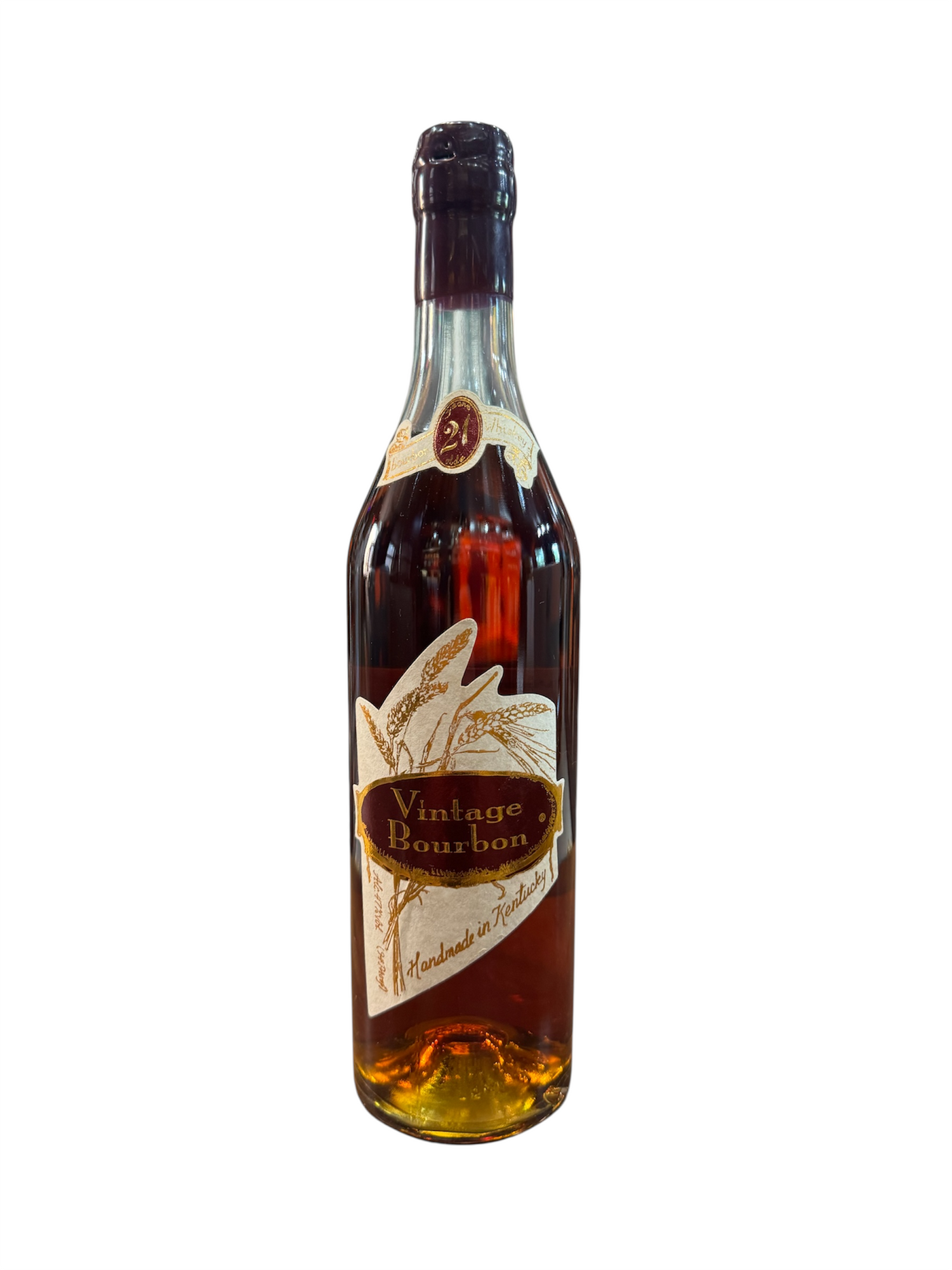
This 21 year kentucky bourbon was bottled by dowling distillery which actually sourced their whiskey from a few different distilleries at that time that this was distilled which was early 1950s. Dowling was owned by Schnley in the 50s and they maintained about a dozen kentucky distilleries who were producing at that time. Rumors exist that this was distlled at Hoffman distilling, but there is no way to know, unless you can track down someone who helped with the acquisition 70 years ago.
Bottled in Bond - Distilled in 1921 and bottled in 1933, this rye whiskey was distilled and protected in bond by the American Medicinal Spirits Company from the Prohibition Act of 1920, which made alcohol production and consumption illegal. The Mount Vernon brand was produced at the Gwynnbrook Distillery in Maryland. The American Medicinal Spirits Company was one of only around 30 distilling companies to survive Prohibition of the 434 that existed prior. Exploiting the medicinal loophole was the brainchild of Otto Wathen, an idea which continues to prove its value today in the persisting image of his still ever-popular portfolio, which included Old Grand-dad and Hill & Hill. The American Medicinal Spirits Company would go on to become National Distillers following the repeal of the Prohibition laws, and Mount Vernon continued as one of the key products in their portfolio.
Pappy Van Winkle 25 Years Old Decanter, Old Rip Van Winkle 25 Year
$59,999.00
Unit price perPappy Van Winkle 25 Years Old Decanter, Old Rip Van Winkle 25 Year
$59,999.00
Unit price perPredominant oak stands out but not overpowering as you would expect in a 25-year old bourbon. Wheated bourbons typically age well, and this ORVW follows suit. The sweet sugars hold up and provide an excellent balance and flavor complexity to the oak forward. The proof point is just right with this expression. It’s a straight down the middle, aged wheated bourbon that is very nice.
A true collectors Rye with an intricate and storied past! The Van Winkle Family Reserve Rye is age stated as 13 years old, but is in fact 19 years old. It's the Pappy of ryes, or so the story goes. In fact, Van Winkle Family Reserve Rye was not actually distilled at Stitzel-Weller. The distillery from which the 2008 rye comes is the Medley distillery in Owensboro. However in 2004, when the rye was moved to stainless steel tanks, it was blended with rye distilled at Cream of Kentucky (Old Bernheim). The 2008 is particularly sought after as it is rumored that in 2012, 4 years later, Buffalo Trace began added their own rye to the blend, making the 2008 an example of a pure Medley/Bernheim Rye. Lastly, The move to stainless steel tanks was done to arrest the aging process which actually makes the 2008 vintage a 19 year rye even thought it is labeled as a 13 year.
--
A true collectors Rye with an intricate and storied past! The Van Winkle Family Reserve Rye is age stated as 13 years old, but is in fact 19 years old. It's the Pappy of ryes, or so the story goes. In fact, Van Winkle Family Reserve Rye was not actually distilled at Stitzel-Weller. The distillery from which the 2008 rye comes is the Medley distillery in Owensboro. However in 2004, when the rye was moved to stainless steel tanks, it was blended with rye distilled at Cream of Kentucky (Old Bernheim). The 2008 is particularly sought after as it is rumored that in 2012, 4 years later, Buffalo Trace began added their own rye to the blend, making the 2008 an example of a pure Medley/Bernheim Rye. Lastly, The move to stainless steel tanks was done to arrest the aging process which actually makes the 2008 vintage a 19 year rye even thought it is labeled as a 13 year.
In 1893, when he was 18 years old, Julian "Pappy" Van Winkle Sr. began working as a salesman for the liquor wholesaler, W.L. Weller & Sons. Fifteen years later, he and another Weller salesman bought the firm. In 1910 they acquired the A. Ph. Stitzel Distillery in Louisville, Kentucky, which had started as a sour mash whiskey distillery in 1872.
The Stitzel Distillery supplied much of the whiskey sold by the Weller wholesale firm. The consolidation coincided with prohibition, during which time the Stitzel-Weller firm was licensed by the government to produce whiskey for medicinal purposes. One of their labels that was introduced on the market just before prohibition was Old Rip Van Winkle. After prohibition, the brand was not reintroduced until after 1972 when the Stitzel-Weller distillery and its current brand names (including W. L. Weller, Old Fitzgerald, Rebel Yell, and Cabin Still) were sold to other companies.The only brand name the Van Winkle family had kept the rights to was the pre-prohibition brand Old Rip Van Winkle.
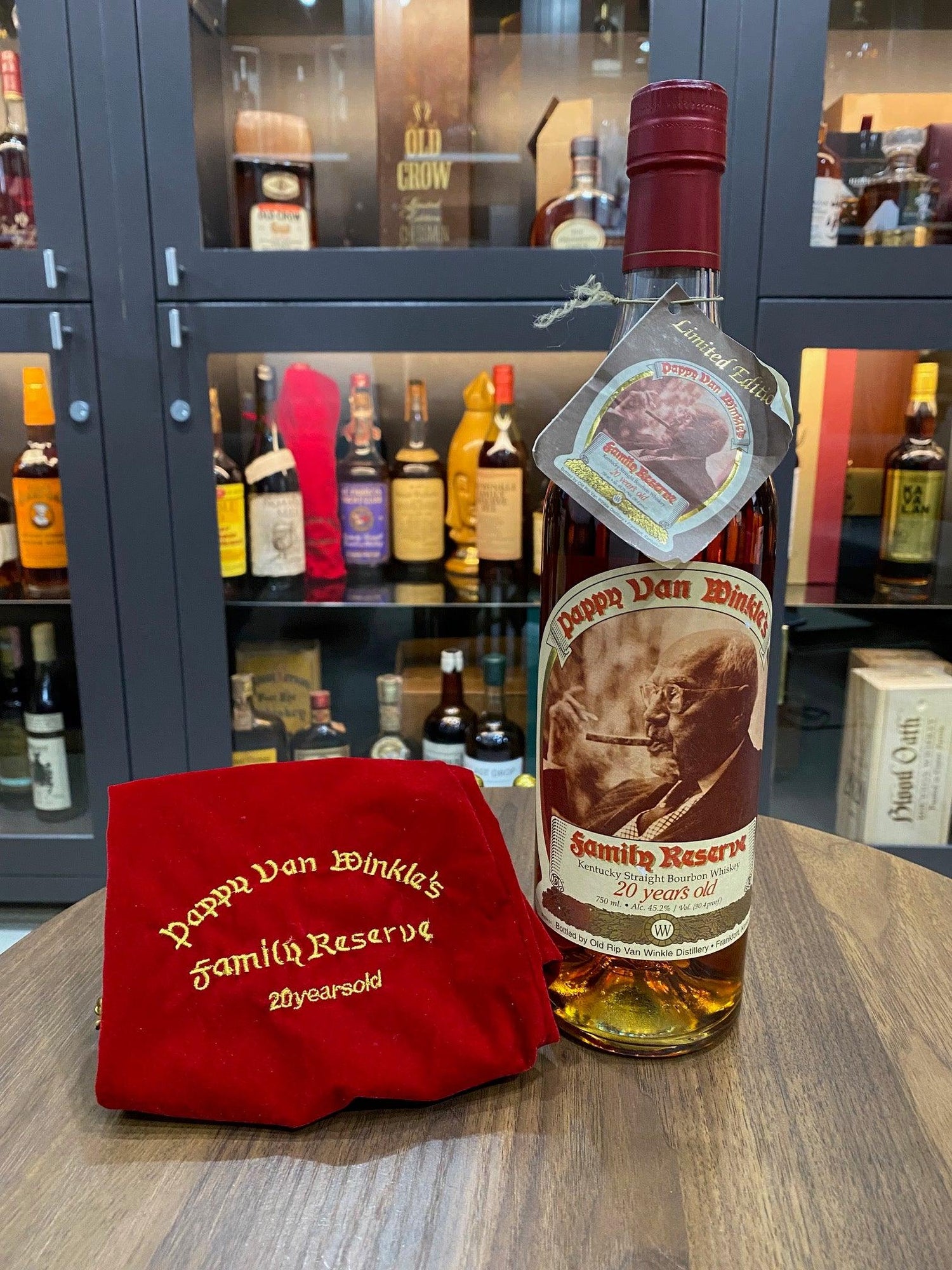
The Stitzel-Weller Distillery was opened on the day of the Kentucky Derby in 1935, just outside Louisville in Shively, Kentucky. At the time of his death in 1965 at the age of 89, Pappy Van Winkle was the oldest active distiller in the nation. A photo of him lighting a cigar graces the bottle's label.
Sometime after the Stitzel-Weller distillery was sold in 1972, Julian Van Winkle, Jr. resurrected the pre-prohibition Old Rip Van Winkle brand and initially used old whiskey stocks from the distillery for its bottlings. Julian Jr. died in 1981 and Julian Van Winkle, III (Pappy's grandson) took over the Old Rip Van Winkle Distillery company.
After the initial sale in 1972, the Stitzel-Weller distillery was eventually closed completely in 1991.
Since 2002, the Van Winkle brands have been distilled and bottled by the Sazerac Company at the Buffalo Trace Distillery as a joint venture with the Old Rip Van Winkle Distillery company.
In 2013, Julian Preston Van Winkle III, said the 2013 bottlings of the 23-year brand expression "may be the last of its kind", since at that point there was very little left of the aging stock from the Stitzel-Weller distillery (although he said the brand would not be discontinued). The makers say that they do not want to boost production, as there is considerable long-term risk, and they do not want to be left holding copious quantities of unsaleable bourbon should tastes, fashions or circumstances change.
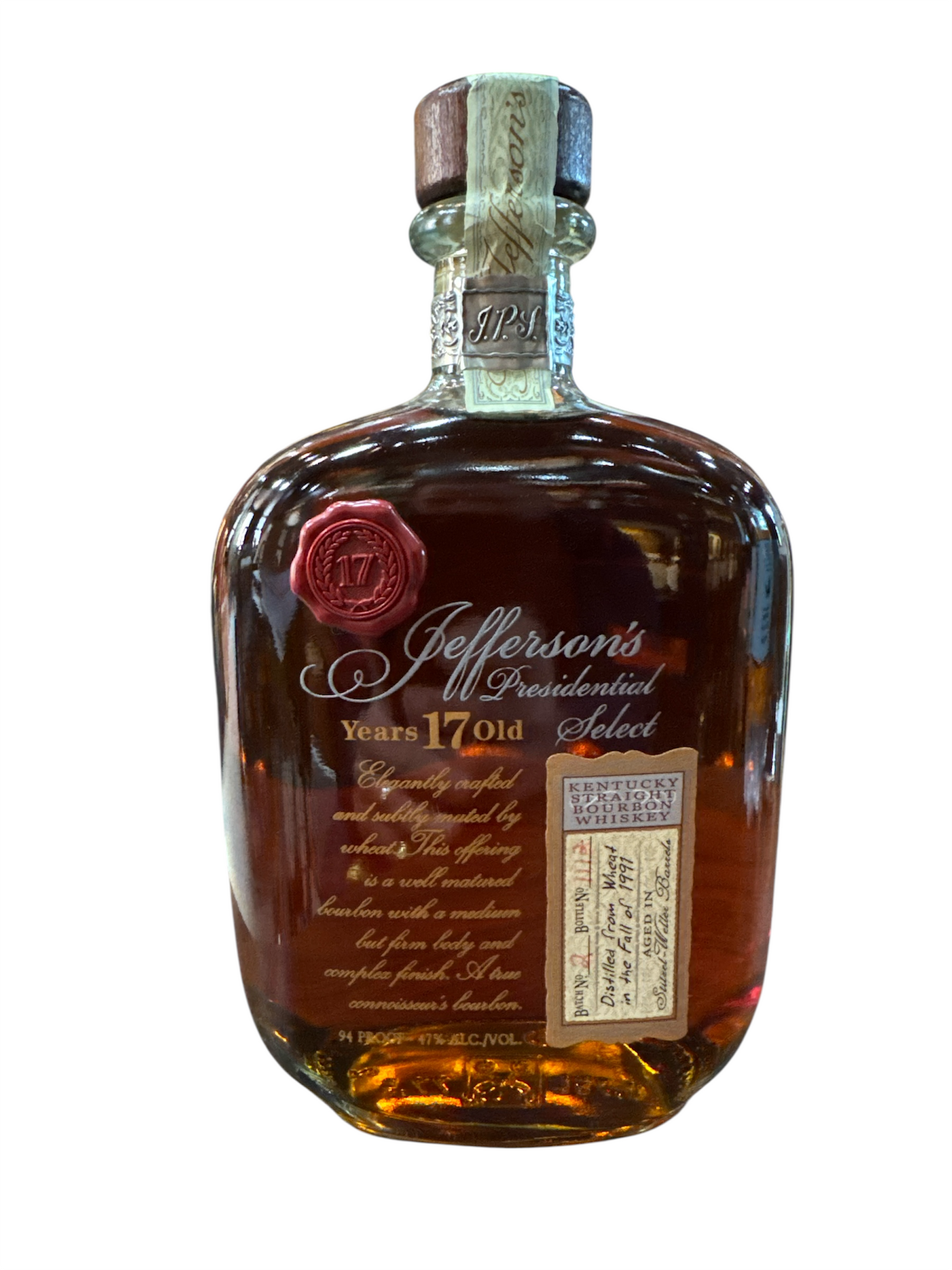
An incredibly rare offering from the Van Winkle family reserve. This was bottled in 1990 by Julian Van Winkle III. His father, Julian II, had retained an office at the old Stitzel-Weller distillery following his forced sale of it in the 1970s, but this hospitality was not extended to his son, who had to buy Hoffman distillery in 1983, re-naming it Old Commonwealth. There he bottled much of the best-regarded whiskey in America, including Nathan Stone's, Very Olde St. Nick, the A.H. Hirsch Reserve, and this, the Van Winkle Family Reserve. It is believed this Van Winkle family reserve bourbon was sourced from Boone distillery, where it was barreled in 1974. It was bottled twice: this one in 1990, and the next one at 17 years old in 1991. Both were intended for the Japanese market, who were at the time more willing to pay premium prices for well-aged bourbon. Van Winkle III continued to bottle at Old Commonwealth until 2002, when thinning stocks necessitated an agreement with the Sazerac company, who warehoused his remaining barrels, and produced limited quantities of Pappy Van Winkle Family Reserve on an annual basis until it finally ran out. It is now distilled at Buffalo Trace using Pappy's old recipe. These original bottles of Boone distilled Van Winkle reserves are incredibly rare and sought after in equal measure. Fun fact: Van Winkle has stated that he "got away" with using red wax here as Maker's Mark only held the trademark in the US.
In 1893, when he was 18 years old, Julian "Pappy" Van Winkle Sr. began working as a salesman for the liquor wholesaler, W.L. Weller & Sons. Fifteen years later, he and another Weller salesman bought the firm. In 1910 they acquired the A. Ph. Stitzel Distillery in Louisville, Kentucky, which had started as a sour mash whiskey distillery in 1872.
The Stitzel Distillery supplied much of the whiskey sold by the Weller wholesale firm. The consolidation coincided with prohibition, during which time the Stitzel-Weller firm was licensed by the government to produce whiskey for medicinal purposes. One of their labels that was introduced on the market just before prohibition was Old Rip Van Winkle. After prohibition, the brand was not reintroduced until after 1972 when the Stitzel-Weller distillery and its current brand names (including W. L. Weller, Old Fitzgerald, Rebel Yell, and Cabin Still) were sold to other companies.The only brand name the Van Winkle family had kept the rights to was the pre-prohibition brand Old Rip Van Winkle.
The Stitzel-Weller Distillery was opened on the day of the Kentucky Derby in 1935, just outside Louisville in Shively, Kentucky. At the time of his death in 1965 at the age of 89, Pappy Van Winkle was the oldest active distiller in the nation. A photo of him lighting a cigar graces the bottle's label.
Sometime after the Stitzel-Weller distillery was sold in 1972, Julian Van Winkle, Jr. resurrected the pre-prohibition Old Rip Van Winkle brand and initially used old whiskey stocks from the distillery for its bottlings. Julian Jr. died in 1981 and Julian Van Winkle, III (Pappy's grandson) took over the Old Rip Van Winkle Distillery company.
After the initial sale in 1972, the Stitzel-Weller distillery was eventually closed completely in 1991.
Since 2002, the Van Winkle brands have been distilled and bottled by the Sazerac Company at the Buffalo Trace Distillery as a joint venture with the Old Rip Van Winkle Distillery company.
In 2013, Julian Preston Van Winkle III, said the 2013 bottlings of the 23-year brand expression "may be the last of its kind", since at that point there was very little left of the aging stock from the Stitzel-Weller distillery (although he said the brand would not be discontinued). The makers say that they do not want to boost production, as there is considerable long-term risk, and they do not want to be left holding copious quantities of unsaleable bourbon should tastes, fashions or circumstances change.
An incredibly rare offering from the Van Winkle family reserve. This was bottled in 1991 by Julian Van Winkle III. His father, Julian II, had retained an office at the old Stitzel-Weller distillery following his forced sale of it in the 1970s, but this hospitality was not extended to his son, who had to buy Hoffman distillery in 1983, re-naming it Old Commonwealth. There he bottled much of the best-regarded whiskey in America, including Nathan Stone's, Very Olde St. Nick, the A.H. Hirsch Reserve, and this, the Van Winkle Family Reserve. It is believed this Van Winkle family reserve bourbon was sourced from Boone distillery, where it was barreled in 1974. It was bottled twice: this one in 1991, and first at 16 years old in 1990. Both were intended for the Japanese market, who were at the time more willing to pay premium prices for well-aged bourbon. Van Winkle III continued to bottle at Old Commonwealth until 2002, when thinning stocks necessitated an agreement with the Sazerac company, who warehoused his remaining barrels, and produced limited quantities of Pappy Van Winkle Family Reserve on an annual basis until it finally ran out. It is now distilled at Buffalo Trace using Pappy's old recipe. These original bottles of Boone distilled Van Winkle reserves are incredibly rare and sought after in equal measure. Fun fact: Van Winkle has stated that he "got away" with using red wax here as Maker's Mark only held the trademark in the US.
Vintage Dusty Bottle Collection: Rare, Untouched Spirits from a Bygone Era
Now Available!
Customized Gift Set Boxes
Contact our concierge for bulk/corporate pricing