For anyone beginning to explore the world of whisky, one question usually comes first:
What’s actually the difference between whiskey, bourbon, Scotch, Irish whiskey, and Japanese whisky?
With World Whisky Day coming up on May 16 2026 (third Saturday of May), we thought it would be a good time to dive in.
The answer comes down to a combination of:
Where it’s made
The grains used
Distillation methods
Barrel aging requirements
And, ultimately, flavor profile
While all four styles belong to the broader whisky family, each carries its own identity, tradition, and drinking experience.
Here’s a straightforward breakdown of the major whisky categories — and what makes each one worth exploring.
What Is Bourbon?
Bourbon is an American whiskey primarily associated with Kentucky, though it can legally be made anywhere in the United States.
To qualify as bourbon, it must:
Be made from at least 51% corn
Be aged in new charred oak barrels
Be distilled to no more than 160 proof
Enter the barrel at no more than 125 proof
Contain no additives or artificial coloring
What Does Bourbon Taste Like?
Bourbon is often known flavors and notes of:
Caramel
Vanilla
Brown sugar
Toasted oak
Baking spice
Dark cherry
Peanut or nutty notes (in some mash bills)
Because of the new charred oak requirement, bourbon typically carries a richer and sweeter profile than many other whiskey styles.
Popular Bourbon Styles
Wheated bourbon (softer, sweeter)
Rye bourbon (spicier, drier)
Single barrel bourbon
Small batch bourbon
Cask strength bourbon
Best For
Drinkers who enjoy:
Fuller-bodied pours
Vanilla and caramel-forward flavor
Bold oak influence
Collectible limited releases
Bourbon Recommendations
Blood Oath Pact Series
A collector favorite known for creative blending and unique finishing techniques. Rich, layered, and ideal for drinkers who enjoy modern bourbon with complexity.
Old Carter Bourbon
Highly sought-after small batch and barrel strength releases known for deep flavor concentration, dark fruit, spice, and powerful structure.
Heaven Hill Heritage Collection
A more mature, oak-driven bourbon experience showcasing age, balance, and classic Kentucky character.
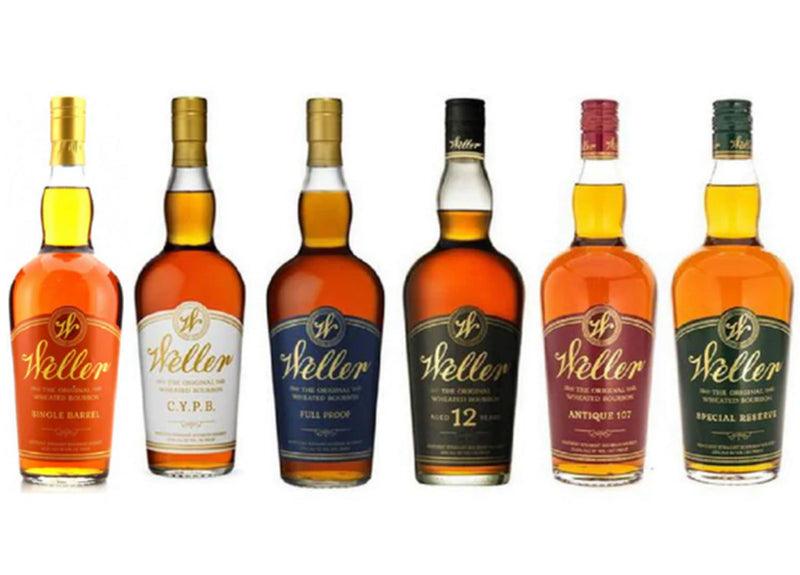
Weller 12 Year
A softer wheated bourbon profile with caramel, vanilla, and rounded oak influence that has become increasingly collectible.
What Is Scotch Whisky?
Scotch whisky must be made in Scotland and aged there for at least three years in oak casks.
Unlike bourbon, Scotch is commonly made with malted barley and often aged in used barrels, including:
Ex-bourbon casks
Sherry casks
Wine casks
The Two Main Categories of Scotch
Single Malt Scotch → made from 100% malted barley at one distillery
Blended Scotch → combines whisky from multiple distilleries
What Does Scotch Taste Like?
Scotch flavor varies dramatically by region and style.
When drinking Scotch you may find notes of:
Smoke and peat
Sea salt
Dried fruit
Honey
Leather
Earthiness
Malt sweetness
Is All Scotch Smoky?
No. This is one of the biggest misconceptions in whisky.
Peated Scotch from Islay can be intensely smoky, but many Highland and Speyside Scotches are fruit-forward, elegant, and approachable.
Best For
Drinkers who enjoy:
Complexity and nuance
Earthier or drier profiles
Layered aging influence
Slow sipping pours
Scotch Recommendations
Macallan, specifically the Sherry Oak Series
A classic introduction to sherried Scotch, known for dried fruit, spice, chocolate, and elegant oak influence.
Lagavulin 16 Year
For those curious about peated Scotch, Lagavulin offers one of the category’s most iconic smoky profiles while remaining remarkably balanced.
Glenmorangie
Known for its smooth, approachable profile and elegant cask finishes, Glenmorangie is often recommended as an excellent introduction to single malt Scotch. Expect notes of honey, citrus, vanilla, and soft oak, with a lighter, refined style that appeals to both new and experienced whisky drinkers alike.
What Is Irish Whiskey?
Irish whiskey is traditionally triple distilled, which often creates a lighter and smoother profile than Scotch.
Irish Whiskey must:
Be made in Ireland
Be aged at least three years
Irish whiskey can be made from:
Malted or unmalted barley
Corn
Other grains
What Does Irish Whiskey Taste Like?
Irish whiskey is commonly associated with flavors of:
Honey
Orchard fruit
Vanilla
Light spice
Biscuit or cereal notes
Compared to bourbon or heavily peated Scotch, Irish whiskey is often softer and more approachable.
Why Is “Whiskey” Spelled Differently?
Ireland and the United States commonly use the spelling:
Whiskey
Scotland, Canada and Japan usually use:
Whisky
Both are correct depending on origin.
Best For
Drinkers who enjoy:
Smooth, easy-drinking pours
Lighter body
Beginner-friendly whisky
Balanced cocktails
Irish Whiskey Recommendations
Redbreast 12 Year
Widely considered one of the benchmark Irish whiskeys, offering a richer and more layered take on the category with orchard fruit, spice, and toasted nuts.
Spot Whiskey Series
With various examples on the Mitchel and Son's "Spot Series" the Yellow and Red spot releases are excellent examples of approachable but nuanced Irish whiskey.
What Is Japanese Whisky?
Japanese whisky was heavily influenced by Scotch production methods in the early 20th century, but over time it developed its own style and reputation.
Most Japanese whisky focuses on:
Precision
Balance
Elegance
Texture
Subtle complexity
What Does Japanese Whisky Taste Like?
Japanese whisky often highlights:
Delicate fruit
Floral notes
Soft smoke
Honey
Light oak
Tea-like nuance
Compared to bourbon, Japanese whisky is typically more restrained and refined in profile.
Why Is Japanese Whisky So Popular?
In recent years, Japanese whisky gained worldwide attention because of:
International awards
Limited production
Exceptional blending
Collector demand
Some bottles have become highly sought-after due to scarcity and age statements.
Best For
Drinkers who enjoy:
Elegant, balanced pours
Subtle complexity
Scotch-inspired styles
Refined sipping whisky
Japanese Whisky Recommendations
Hibiki Harmony
Balanced, elegant, and approachable, Hibiki remains one of the best introductions to Japanese whisky.
Yamazaki 12 Year
A refined single malt known for soft fruit, delicate oak, and layered complexity.
Nikka From the Barrel
A higher-proof Japanese whisky with remarkable richness and structure for the price point.
Bourbon vs Scotch vs Irish vs Japanese Whisky: Quick Comparison
Style
Main Grain
Typical Flavor Profile
Barrel Style
Overall Character
Bourbon
Corn
Vanilla, caramel, oak, spice
New charred oak
Rich and bold
Scotch
Malted barley
Smoke, malt, dried fruit, earth
Usually used casks
Complex and varied
Irish Whiskey
Mixed grains/barley
Smooth, honeyed, light spice
Used casks
Approachable and smooth
Japanese Whisky
Often malted barley
Floral, delicate, balanced
Scotch-inspired aging
Elegant and refined
Which Whisky Style Is Best for Beginners?
There’s no single correct answer, but generally:
Best Beginner Bourbon
Look for:
Wheated bourbons
Lower proof small batches
Balanced Kentucky classics
Best Beginner Scotch
Start with:
Speyside Scotch
Unpeated Highlands
Sherry-finished styles
Best Beginner Irish Whiskey
Irish whiskey is often the easiest entry point because of its lighter body and smooth texture.
Best Beginner Japanese Whisky
Japanese whisky works well for drinkers who appreciate subtlety and balance over intensity.
Final Thoughts
The best way to understand whisky is ultimately to taste across categories.
Bourbon offers richness and power. Scotch delivers depth and regional character. Irish whiskey emphasizes smoothness and approachability. Japanese whisky focuses on precision and balance.
None is objectively “better” than another — they simply offer different experiences.
And once you start noticing how grain, barrel, proof, and aging shape each pour, the world of whisky becomes far more interesting.
Explore Rare Bourbon, Scotch, Irish & Japanese Whisky
At The Bourbon Concierge, we curate collectible and hard-to-find bottles across the whisky world — from sought-after bourbons and Japanese releases to vintage Scotch and rare Irish whiskey discoveries.
Whether you’re building a collection or simply looking for your next great pour, our team is here to help you explore what fits your palate best.